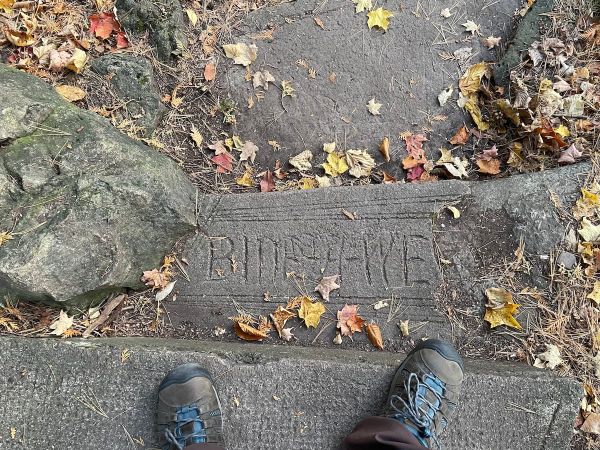
Sixty
And on and on we go


When Star Trek landed in my life it expanded into my brain fully-formed, a reverse Athena, charting and mapping the areas that were already there and making sense of them, like a red-shirted away team with their tricorders. I was obsessed, instantly; and aware, instantly. This was a cosmology I could work with. This was how outer space was supposed to be.
I said “when Star Trek landed in my life.” It actually did so three times. First: when I was a kid, there was a thing called “reruns.” This is because even though there were far less TV channels — between three and seven, most places — there wasn’t enough TV to put on them.
So in some places and on some channels and in certain times — say, for example, the weekend, on CHCH, the feed out of Hamilton which was the only signal that came through watchably clear on the dumpy black and white television parked in front of my grandfather’s green lounger at the cottage — they’d show “reruns.” Except what I really mean here is: on the weekends and in the off-times, channels like that would travel backwards in time a couple of decades, and be nothing but episodes of Batman, and Andy of Mayberry, and I Love Lucy, and Star Trek, of which there were (evidently) a trillion. An endless churn of television-as-it-was, except for the ads, which were for ’80s products.
Anyway. That is almost certainly the first means by which I saw Star Trek, either at the cottage or at home, on a Sunday morning or afternoon, maybe 2:00, and I do distinctly recall my mother telling her then-nine-year-old child that I’d probably really like Star Trek, because she knew me and she was right. She was only off by a couple of years: I remember Captain Kirk and Mr. Spock in their bright yellow and blue pyjamas, but I couldn’t make the leap on what these out-of-date weirdos were meant to mean to me.
A few years later, though, I saw Star Trek IV: The Voyage Home on cable, and that, that, I thought was Tits McGee. I was already deep in the tank for Back to the Future, and time travel was “in,” and Star Trek IV fuckin’ rules anyway (it would be a few more years before I realized I’d accidentally landed on one of the best things the entire franchise had ever, or would ever, do). So for a year or so — let’s call that year “1988” — and in spite of everything I’ve mentioned above about my experience of the original Star Trek still being true, I considered myself knowledgeable enough about all things Trek to haughtily claim to a boy who was my friend that the Original Series was better than Star Trek: The Next Generation, even though I had never seen the latter, and never really seen the former.
The boy in question was a camper at Camp Kandalore, recently re-opened for business in the summer of 1988, and one power failure away from total social collapse. A counsellor had already been medevacked for attempting a back flip off the dock and landing on his head; another kid had spent a night moving back and forth through time because he’d gone around the big tree on the rope swing too fast, and… well, you know. I’d recently been out in the woods for a piss and had noticed that I now had pubic hair. And somewhere in the midst of all that, a kid in my cabin told me I’d really like Star Trek: The Next Generation. He wasn’t my mom, but he knew; and I hope he’s out there somewhere, and can forgive me for nerdily proclaiming that I preferred Kirk and Spock, based on a single movie that I’d liked, and no experience of The Next Generation whatsoever.
Star Trek: The Next Generation was the show that everyone hated for that entire first year of its life, but this was also an era of TV where shows were allowed to be hated for — generally — two or three seasons before anyone actually did anything about it, including the network. There were Star Trek: The Next Generation stickers in the bottoms of cereal boxes at that selfsame cottage where Grandpa’s TV got the signal from CHCH, and my cousin Mark and I made fun of a sticker of Worf because it looked like someone had slapped a live turtle on the man’s forehead, “Old Turtlesmack” we called him, and made up an elaborate mythology for how, exactly, one ends up with a turtle smacked on one’s head.
But urged by that Kandalore kid, in August of that year when I was back home, I caught a rerun of one of the last episodes of Star Trek: The Next Generation‘s first season, and that episode happened to be “We’ll Always Have Paris,” which was, and is, a fucking banger. And that was it. That was when Star Trek landed in my life.
Through the side-door, Star Trek is also one of the main reasons that the premise of screenwriting landed in my life. Starting in 1990 I taped every single episode of Star Trek: The Next Generation as it aired, dutifully editing out the commercials with a flick of the pause-record button, which meant I could get eight episodes onto a single VHS tape on Extended Play. And I used those tapes, man. My siblings grew violent at the evolving reality that every single day after high school I’d be watching at least one, sometimes several, taped episodes of Star Trek: The Next Generation. Sometimes just that week’s episode, every single day for the whole week.
Anyways. Because I was getting eight episodes onto each tape and because after a year or two those tapes were starting to stack up, and because the episodes on those tapes weren’t quite in the right order for reasons owing to Next Gen‘s strange syndication and my own (limited) high school social life, I needed a manifest. I needed to know where “The Vengeance Factor” was, y’know? Season 3 tape 2, or 3? Near the front or near the back?
Subscribe or upgrade
Visit your account settings if you're already a member.
So I used Bank Street Writer (look it up!) to print out dot-matrix sheet after sheet of the contents of those tapes, and I kept those sheets in a binder, and because those sheets looked fairly unimpressive if they only had the episode titles, I started
- applying star ratings, thus becoming a critic;
- noting the director, because I already wanted to be one; and
- noting the writers on each episode.
Next Gen, once Michael Piller took over, created a relatively famous open-door policy on scripts, which is probably why I started to take notice of the writing. Facing the insurmountable task of writing twenty-six new episodes of this show every year, Piller decided that anyone, anywhere, could write a spec script for Next Gen, so long as they mailed it in with a waiver absolving Paramount of any legal woes down the road. If your script got the writer’s assistant’s attention among the dreck in the slush pile, you might be called in to pitch; and your spec might go on to form the spine, or at least the kernel of the idea, of an actual produced episode of Star Trek: The Next Generation, or later Deep Space Nine or Voyager.
Ron Moore — who’d go on to create Battlestar Galactica and For All Mankind, after doing an MVP run on both Next Gen and Deep Space Nine — got his start by mailing in a spec script for what would become “The Bonding.” I mailed in a spec, too — actually, it was my thesis project in OAC Writer’s Craft, as well — making Star Trek, certainly, the first thing I ever attempted to write for professionally.
(Yes, I do have a copy of that submission somewhere; I saw it last month, actually. I should really print it and read it. My script was for Voyager, and the idea, in dramatically different terms, actually turned up on the show eventually, as this episode — although there’s very little likelihood that my script had anything to do with it. They certainly never called.)
Here’s what I continue to like about Michael Piller’s open-door policy, and why I consider it one of the foundational decisions that inadvertently made Star Trek: The Next Generation not only workable but great: it recognized that for Gene Roddenberry’s Star Trek format to work, the engine needed ideas. The ideas could come from anywhere because it was mathematically impossible that a sequestered team of five men (and eventually, some women) were going to come up with enough good ones to build a season around, let alone seven of them in a row.
Nowadays when I say the powers that be are almost cartoonishly reluctant to make actual Star Trek, this format is what I’m talking about. Roddenberry’s format was actually pretty simple: every week, the crew of the Enterprise would encounter something science-fictiony and would have to deal with it. Sometimes, the something science-fictiony would be a useful analogy for a moral argument that might have parallels to something not-science-fictiony happening here on our old Planet Earth; sometimes, it would be Spock getting his brain taken out. But there would always be something science-fictiony as the engine of the story.
Piller layered on the requirement that, every week, the something science-fictiony had to drive a story that was rooted in one of our major characters. (This is part of why Moore’s “Bonding” script sold: it was a good opportunity to build a unique emotional story around Worf, who was more of an action character most days.)
Star Trek itself has drifted towards and away from this core format over the decades since. You can’t really say Deep Space Nine‘s heyday obeys the format, unless you consider “multi-year territorial war in space” to be a something science-fictiony close enough to the original premise to count. But at least since the end of the Berman era, the people who make Star Trek have not even really tried to make Star Trek in that format*, probably because they consider it too dumpy and low-stakes to drive what they consider to be a big, spectacular, action-adventure franchise. Our loss.
* The exception that proves the rule is Star Trek: Lower Decks, which only gets to be actual Star Trek by way of pretending it’s only at the party to make fun of Star Trek. Having confirmed to the dudebro powers that be that they don’t think Star Trek is cool or interesting, Mike McMahon and his team quietly just do the actual Star Trek format, every single week. It’s great.
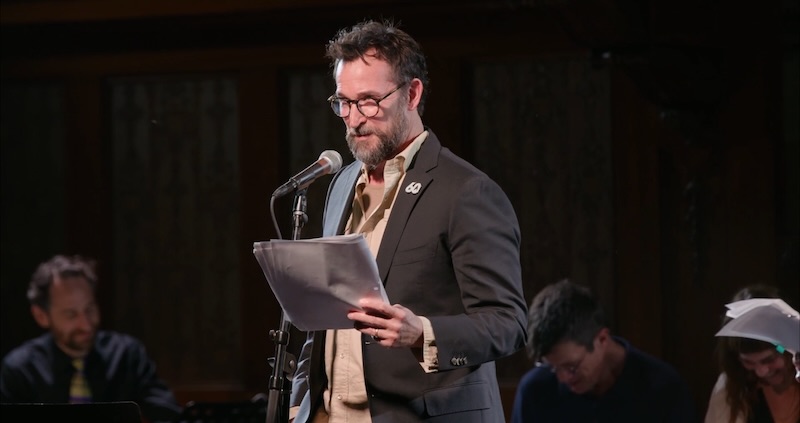
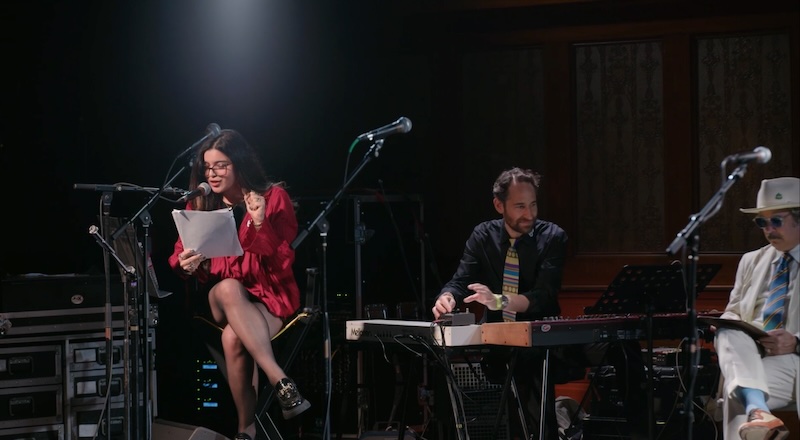
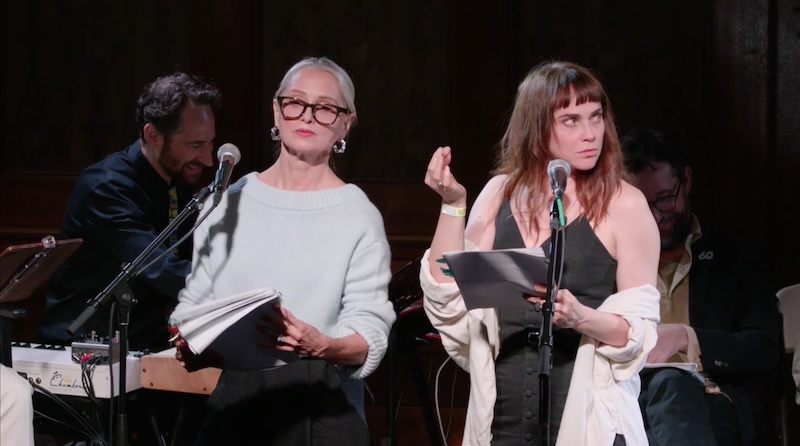
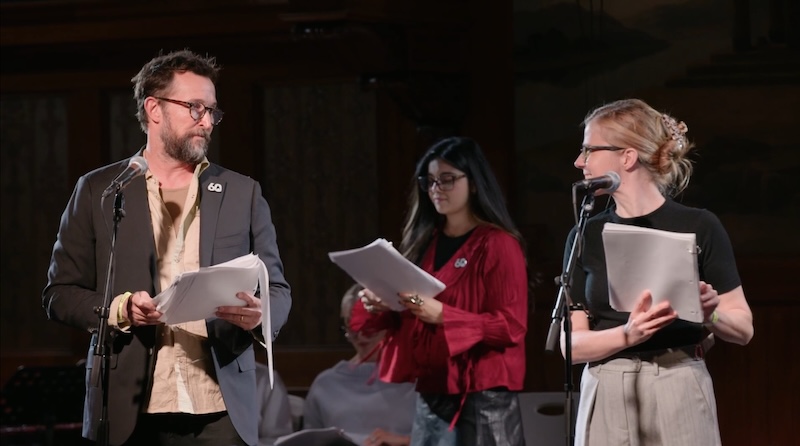
Today Star Trek turns sixty. Last weekend I watched Noah Wyle, a bunch of cast members from The Pitt, and a murderer’s row of special guest stars (Iman Vellani! Clark Gregg! Nathan Fillion!) perform the scripts for “Mudd’s Passion” and “The Man Trap.” It was gorgeous and it was retro, even if it left me wistful about the fact that the only way to celebrate this milestone, it seems, is to wax poetic about how things were in the good old days.
The good old days were never Star Trek‘s brief, after all. This was a show firmly anchored in “the best is yet to come.”

Back in the world
Happy TIFF #51, everyone. Happy TIFF: The Market #1. A Market?? That’s crazy!
TIFF: The Market: The App launched a couple weeks ago. This is how I spent my summer. If you're attending The Market, I hope you enjoy TIFF: The Market: The App.
This week’s linkrecs:
- One more piece by the late, great Soraya Roberts. Funny enough, I was planning to take this exact same trip on this exact same train at roughly the same time. We might have ended up sitting next to each other. She would have pushed me onto the tracks. (Geist)
- Cory Doctorow has great points here, including why the A.I. fight needs to be a labour issue, not a property issue. (Pluralistic)
- Good freaking lord, Silo Season 3 was good. A little slow to start, maybe. But that plane lands. This update brought to you by: Apple TV is doing the best sci-fi, and it’s not particularly close. Suck it, Paramount. (Apple TV+)
- This one’s from April, but pieces like these are now as sadly evergreen as the Onion’s gun violence headline: It’s time to grow up, re: Harry Potter. (Defector)