Translation
On words, oppression, and Teenage Sex & Death
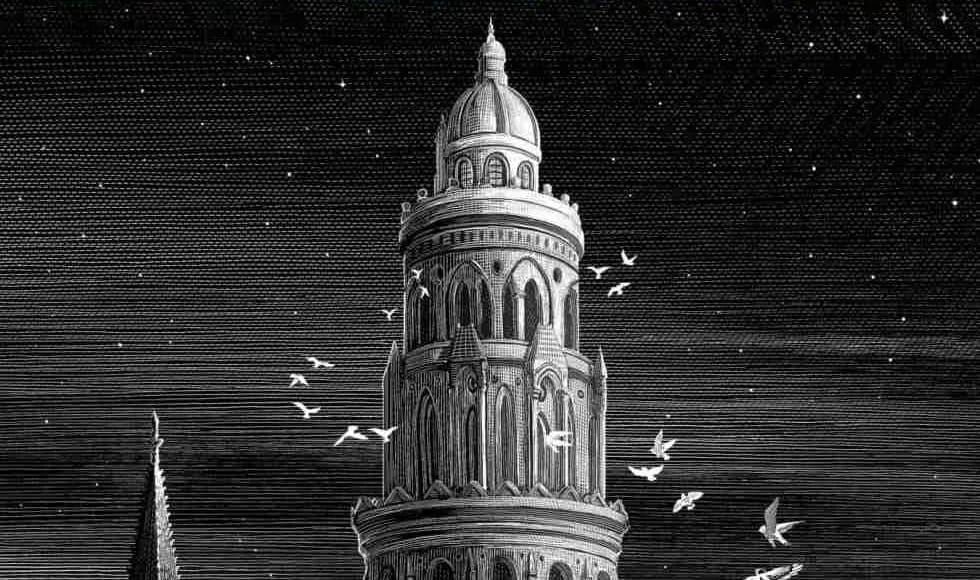
Earlier this month, I read R.F. Kuang’s Babel. The novel contains one of the most deviously ingenious premises for a magic system I’ve yet encountered. In Babel (set in Oxford in the 1830s), the strength of the British Empire is built on their world-leading control of this magic: the magic of translation. Specifically, more importantly, the power of what is lost when a meaning is translated from one language to another.
A word has a meaning in its root language. It has captured a premise, an idea, a flavour, a colour. It has done so owing to the lineage of this root language, and to the cultural specifics that surround the premise’s usage in that language. Here I think I can guess at the germ of Kuang’s idea: words bind something wordless and in so doing constrain it, contain it, and transform it.
Then: someone comes along and tries to translate the word into a different language. As they do so, the translator moves it from one bracket of meanings to another; they transpose it from one lineage and series of cultural specifics into another one. This is normal. This is translation.
The magic in Babel is simply this: knowing that a meaning has been moved between two bindings, one in its original language and one in the new (usually English), the translators at the University of Oxford can use the power of what is lost in that process — what is neglected between the two bindings — to unleash unspeakable power. And so an empire is built.
Kuang’s metaphor has great utility in her overall project, which is to both underline how colonialism works against the colonized, and to weave a narrative around the necessity and cost of anticolonialism. (Andor fans would enjoy this book.) Appropriately given the subject matter, Kuang’s command of language — to say nothing of the depth of her research into its mechanics — are exquisite.
“Woke 1” wasn’t yours
Speaking of colonialism, by the time the premise of the word “woke” reached the mainstream, it had been sandblasted of its intentions, its origins, and any of its power. Now it is a dirty word, an anti-word. In 2026 it is a word used almost always to combat its original purpose. If R.F. Kuang’s Babel magic system were real, we might consider an addition: the dark magic of breaking words like this. There is an evil sorcery in how vernacular is appropriated by the ruling class, and then used to oppress and destroy the very premises they contain.
I understand how we get here. We all conduct this binding in the presence of new awareness: we all grasp concepts and hold them in language, in categories, in ways of thinking about things, because we need them to articulate something inarticulable about what we feel inside. (I wrote a whole book about this, re: a series of images in the post-apocalyptic desert.) The words become a useful shorthand: a way to position ourselves within something we already sense but cannot name.
And then, over time, we shorthand and shorthand and shorthand — and shorthand the shorthand — until the entire struggle for liberation against gargantuan forces of supremacy is contained inside an ugly, four-letter word spelled w-o-k-e. Because then it can be so easily contained, so easily articulated, that it can be flicked out of the list of the concerns of the world like an errant gnat on a lapel pin.
This piece by Mychael Denzel Smith in Defector locates the ultimate demise of “woke” as a political premise as having taken place in 2018, two years after the ascension of hatred politics in the United States, and two years before the murder of George Floyd and its response, a.k.a. the point in the movement that everyone (mainstream; privileged; comfortable) thinks was the escalation point for all this. I think a lot about the politics of language in that moment, and the policing of action (ironic, given this was political action against policing), and the ways that liberationists are and aren’t allowed to show up: the respectability of agitation and its consequences, an idea set whose enforcement we saw, have seen, and continue to see in towns like Minneapolis where you aren’t allowed to drive a minivan near an ICE agent lest said agent fear for their life and execute you. So it goes. But sure: “woke 1 was crazy.”
While we’re putting things into buckets to nerf them of their power, I like this recent framing by A.R. Moxon. Like a lot of Moxon’s pieces, the overall essay is much too long. But buried somewhere in the middle of it — a helpful image as we consider buried magic in constraints of meaning — he goes and sorts us all into four general groups:
- Radical supremacists
- Radical humanists
- Institutional supremacists
- Institutional humanists
Moxon’s purpose is to discuss how meaning is rapidly becoming incoherent for some of these frameworks — institutional humanists being the one that stood out for me, a.k.a. the people who believe in the system more than they believe in human rights, or (to put it their way) believe that the system can still be made to work for the progression of human rights through compromise, negotiation, and incremental change. This group is losing political power right now and is being replaced, slowly but surely, by radicalism (on both sides), because (Moxon again) “when [institutional humanists] do things like oppose humanist ends in favour of institutional norms, or like warning about the radical danger of Republicans while proposing finding incremental solutions by working with Republicans, people [read: voters] increasingly find that message incoherent.”
Who’da thunk. Words mean things. When you use words to describe what your principles are, you find yourself constrained by the same bindings with which the words were commanded in the first place.
Somewhere down below R.F. Kuang’s magic system is a more simple, much older idea: that naming a thing conquers that thing. This has less to do with anticolonialism (Kuang’s project) and more to do with our baseline attempts to exist in, and then master, the natural world: all the nameless raging things that evolved to became thunder gods and heterosexuality and Artificial General Intelligence. But naming and conquering the thing is a smug, human misunderstanding. The older, nameless thing is still down there, growing in strength for having been passed by.
There’s a vagina at the bottom of the lake and it’s where the dreams come from
I want to return to a kind of wordlessness. I want to live there more. I don’t mean as an abstract idea; I mean as me, personally. I have been actively and mindfully trying to think less in terms of words, to experience the world less as a sequence of dictionary definitions and more as the other thing. A terrible objective for a writer, I know, but here we are.
I saw Teenage Sex and Death at Camp Miasma last week. Good film. Great film, actually, best of the year so far. After being annoyed and baffled by We’re All Going to the World’s Fair half a decade ago I found myself unprepared for how hard Jane Schoenbrun’s follow-up, I Saw The TV Glow, hit me at an exact moment in which I needed such an exquisite hitting. I also returned to the World’s Fair earlier this year and found myself now perfectly — well, maybe not perfectly, but far better — inhabited by its unease. I’ve gone through a lot myself in this specific half-decade, of course. I’ve been translating.
Now here’s Teenage Sex and Death, hitting me (again) at an exact moment (again) in which I need such an exquisite hitting. Different spot, this time. More fun (sexy!) spot, but here it is. Trying to crawl my way back into my body in this last little while, my sense- and sensual-awareness, in a time in which doing so has felt increasingly foreign and increasingly dangerous, and here’s this fun little movie about weird psychosexual hangups and screen identification and trans horror icons and getting one’s rocks, properly, off.
Teenage Sex and Death is fun, and it’s forgiving, and it’s uncommonly clear-eyed (and queer-eyed) about arousal and shame and bodies and the other thing. It stars Hannah Einbinder as Kris, another cis-seeming avatar in a Jane Schoenbrun movie. Kris is going to direct an elevated-horror remake of a Sleepaway Camp-esque slasher franchise from a made-up 1980s, which she identifies with a little too much — Kris says the original Camp Miasma gave her her queer awakening — and, guiltily, she identifies with it in the “wrong” ways, given the problematic text and subtext of the original.
“Kris is open about how the movies may have fucked her up, and how her identity got all twisted in the fantasy of watching,” Willow Catelyn Maclay writes, before glancing at the film’s most ingenious construct, a literal hole (metaphorical pussy-hole) at the bottom of the lake at the abandoned summer camp Tivoli / Miasma, from which the movie-with-in-the-movie’s killer — adroitly named Little Death, and gorgeously played by TV Glow‘s Jack Haven — emerges.
I rarely get to see movies where the boundaries between what we consider to be the film’s objective reality and its subterranean one are so expertly, and exquisitely, smeared. The shorthand might well be: “what if it’s all real”: the story, the movie, the movie within the movie, all of us out here in the audience watching, and the other thing — a power — that is whatever is unleashed when all these things crash together. When one engages with what waits below the bottom of the lake.
As a writer, and just as person wandering around, I have always been obsessed with that subterranean something. The things underneath the things, whole worlds, everything that might exist within in the thunder at the bottom of the sewer grate on a rainy day. (It is an actual miracle I never read Steven King’s It when I was the age of its protagonists, for it would have killed me.) The hidden city beneath New York in Ron Koslow’s Beauty and the Beast (1987-1990), an image system (and societal construct!) which finds its way into my writing to this day. The rats of NIMH. (“The mice live beneath us. They work tirelessly to create string.”) Or my recent fixation upon another rare movie which seems to smear the boundaries between the story’s objective reality and something angrier and weirder rumbling beneath it, Alan Clarke and David Rudkin’s Penda’s Fen.
This is something that perhaps only cinema (or any art) (or strong psychedelics) can do. Otherwise, reality itself is a binding, a translation of something more. Having grasped (awkwardly) for language to describe my own experience, these works and ideas are very real for me now, because the words and definitions have never lived up to what I sensed was beneath them. It’s inspiring to see an artist, with the clarity and confidence of Schoenbrun, pull something up from under the lake in Teenage Sex and Death. What they’ve brought out feels more like the real thing than anything translated into mere words.