Who am I?
From there to here and here to there

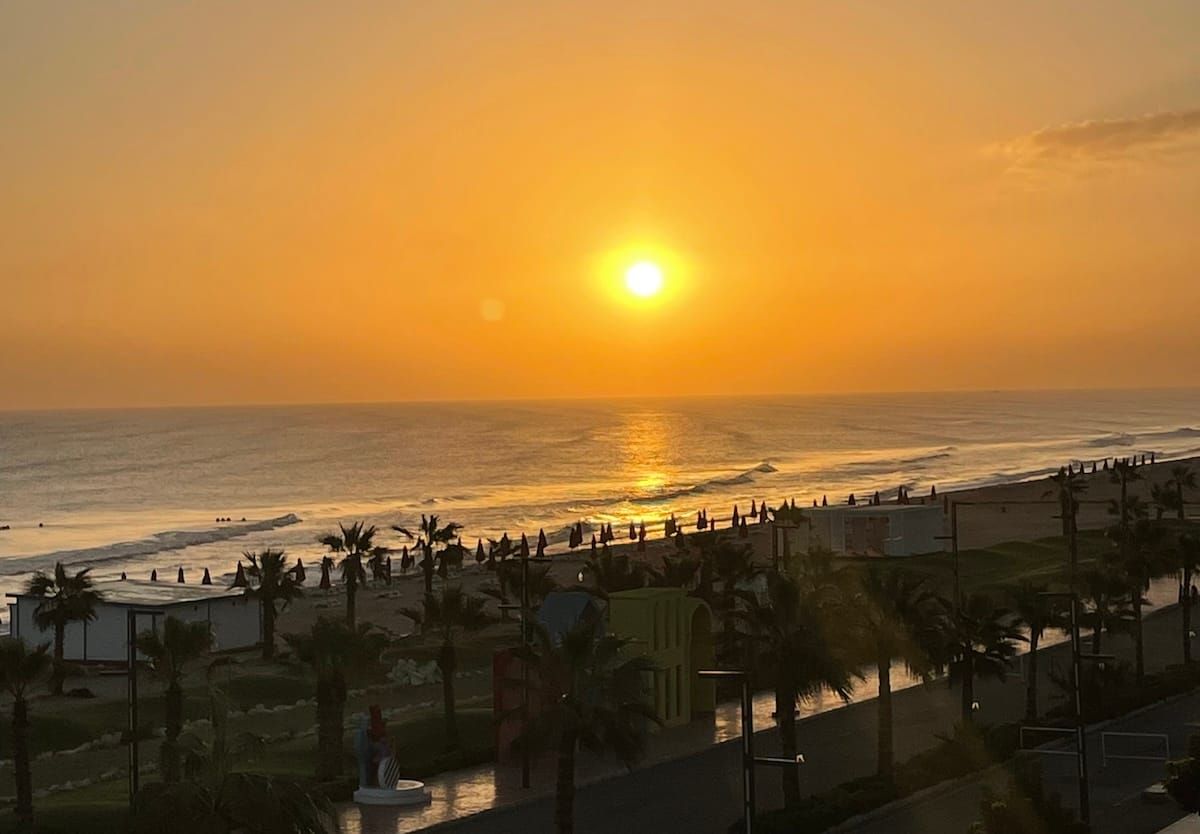
A few years ago I went to Egypt, and I did all the usual white-person-in-Egypt things, and that was all great, and I was treated the way the fatted tourists always (I assume) are treated, because that whole industry knows exactly what it’s doing and what it’s there for, even if (on some level) the tourists themselves frequently do not.
At the tail end of my time in the country, though, my travel agent and my guide and I worked together to send me up to Port Said for a couple of days, which is not one of the usual white-person-in-Egypt things, which is why the Egyptian police services were suddenly super on my ass at pretty much all times, as though — with all deference to the fact that they never did anything, besides keep hilariously minute-by-minute tabs — I had flipped a switch on some national tracking board that turned me from green (“fatted tourist”) to red (“who the fuck does this person think they are??”).
The reason for the detour was simple: my mother was born in Port Said, and lived there till the revolution; and I wanted to see that place during what would likely be my only trip to Egypt ever. And see that place I did, although admittedly, between vague memories (in someone else’s head) and out-of-date maps (on the internet) and — yes, for real; no, I’m not kidding — my own uncanny sense of the spirit of things once I was actually in the place, i.e. the power of the Force — it was not the easiest to work out where, exactly, my grandparents’ apartment had actually been, or when I was standing in front of it, so there were a lot of photos of me doing this in front of different buildings, although I think this one is actually the one, or close enough to it that I was within the block:

Something else happened while I was in Egypt, albeit earlier, in the fatted-tourist stage: I told a few locals about my mom having been born there, and they unanimously declared that I am Egyptian, which I don’t think I’m comfortable calling true and is probably just something generous one can tell a fatted tourist, which is fair. The part that did my nut in was later, when I got home and I was talking to my mother and my aunt (my mom’s younger sister, also born in Port Said) about all this, and they told me that not only had they been born there, but my grandmother, and her mother, had been too. Which, somehow, in my (then) 46 years of life, had never come up.
As I understand it — and I admit the genealogy is vague, for a variety of unimpressive reasons — my mother’s side of my family is mostly of Italian extraction with some Spanish up my maternal grandfather’s side, but it had never clicked for me, or never had been told altogether, that they had settled in Egypt for generations. And they were, obviously, settlers: my grandfather worked for the Suez Company, for goodness’ sake. One of the reason they took off in ’56 was that the Suez Company was nationalized and the British/French authority collapsed; here’s my grandfather signing his resignation letter, shortly before he packed the family off out of Egypt for a few months to stay out of the brewing crisis. A few months which turned out to be the rest of his life.

Unrelated entirely (or so I thought) to Egypt, there’s this lunch my grandmother used to make for me when I was growing up, that we all just call cheetsa. It’s a flaky pastry filled with cheese. It’s not complicated. It is probably my favourite food on Earth.
After she died, thirty years ago this month, there was no recipe written down for cheetsa (or anything else), because my grandmother was the sort who just did it all, and kept it all, in her head. So my mother and I went into the lab for a couple of years and started trying to reverse-engineer the cheetsa recipe from little more than vibes and fading sense-memories. We got pretty good at it, too; we make one every Christmas Eve now, though only just that one, because it takes about 3 hours all told and who has that kind of time anymore, amirite.
Well, I’ll tell ya who: my grandmother (“Bunda”) did. She sure did. She’d knock one of those things together with her arthritic knuckles just as quick as you could say Omar Sharif. She and my Nonno lived on Steeles near Yonge and even though I only indulged inthis once or at most twice, I could give her a call from the payphone at Vari Hall at York University at 2:45 on a weekday and have a hot cheetsa waiting for me by the time the Steeles bus trundled past her place at teatime. She died the springtime after my first year at York. It wasn’t much of a window of opportunity, and I took far less advantage of it than I should have.
Flash forward three decades and I was scrolling around on TikTok the other day and the algorithm (that sainted, benighted algorithm) threw me a video of a guy hitting an Egyptian street food restaurant out in Mississauga. (It’s called Adel’s Fatatre; I haven’t been there yet.) Among other things this Tiktokker tried was the feteer meshaltet. I took one look at it and I said, that’s cheetsa. Call me a racist or a dirty colonizer or whatever but given how foreground my family’s Italian heritage had been throughout my entire upbringing, it had simply never occurred to me that cheetsa was anything other than the product of my grandmother’s Italianness; that it could have been an Egyptian dish (or, more likely, a personalized and customized adaptation of an Egyptian dish) had never entered my wildest imaginings.
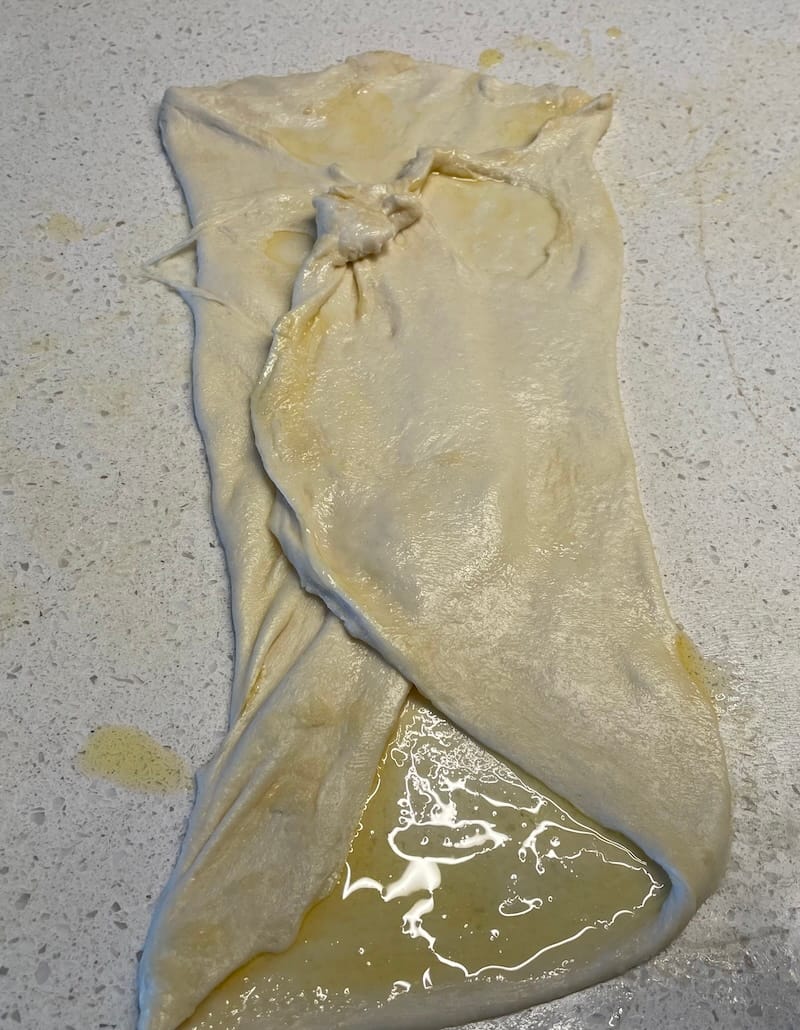
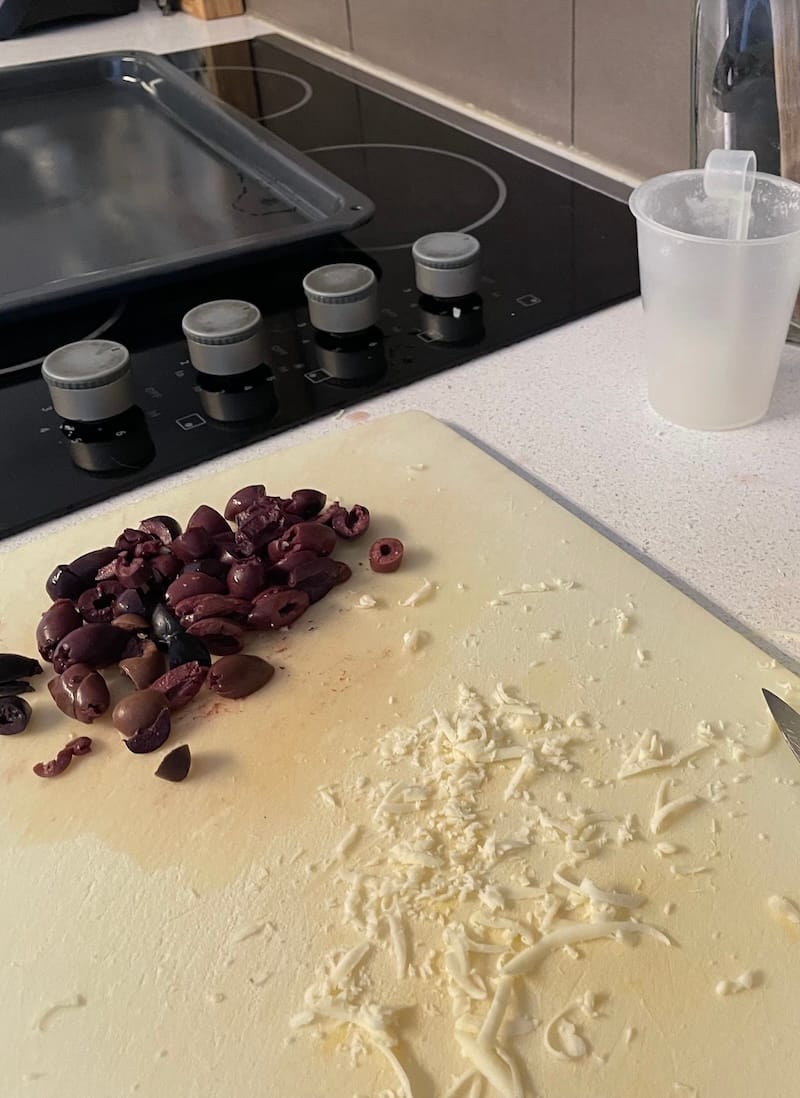
Not knowing my grandmother had not only been born in Egypt but had been raised by people who had also lived in Egypt all their lives, though, it all gets shaded with a different brush now: that my family had an entire way of life in that country that wasn’t just an interruption of a different life elsewhere, like how my brother has lived in Japan for the half-decade. That they were from there, albeit with the hefty “colonizer” asterisk and all that it implies. That the influences are far more mixed in my history than I’d ever kenned growing up, and am now — staring at 50 — only beginning to recognize and reckon with.

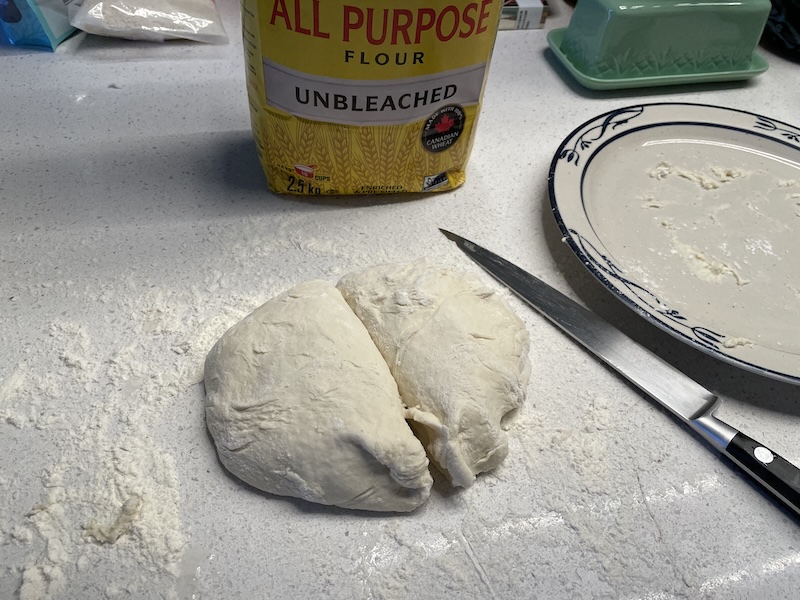
I don’t have anywhere to go with all this, except to say that I think about it a lot now, and especially in times like this, when I get out my (fortunately, not yet arthritic) knuckles and prototype an Egyptian pastry-and-cheese-(and-olives) recipe that might be the ancestor of my favourite food in the world, the one my grandmother made for me “with love!” (yes, she always said this was an ingredient) anytime I was coming over. This tangled mash of mixed lines, of half-memories and colonies and roots, and — more often — just people who lived their lives in a place, that all seem so long ago and far away now.